STOP WORRYING AND OVERTHINKING
A practical 2-hour LIVE workshop for people whose brains won't leave them alone
24 OCTOBER 2026 | TIME HERE | Live Online | £39
YES PLEASE → Book my spotDo you ever wish you could just switch your brain off for a bit?
Not permanently, obviously.
That would cause problems.
Just for an hour or two.
Because there you are, trying to relax, watch something on Netflix or go to sleep...
...and your brain suddenly remembers something you said to someone last Tuesday.
Did that sound rude? Do you think they took it the wrong way?
Probably best to replay the entire conversation 14 times just to make sure.
And while we're here...
What about that thing you've got to do next week? What if it goes wrong? What if THIS happens? Or THAT?
And before you know it, you're lying in bed at 1.17am trying to solve a problem that hasn't actually happened.
Welcome to overthinking.
I know it well.
And on [DATE], I'm running a two-hour live workshop about it.
00
DAYS
00
HOURS
00
MINS
00
SECS
Why this workshop?
A few weeks ago I emailed my Life Raft list.
I'm planning a series of practical workshops around anxiety, so I gave everyone four subjects and asked one simple question:
If you could attend ONE, which would you choose?
I expected a mixture of answers.
I didn't get one.
Every single person who replied chose:
Stop Worrying & Overthinking.
Which tells me there are an awful lot of busy brains out there.
So that's where we're starting.
Here's what we're going to do
Why your brain does this in the first place.
Because it's not deliberately trying to ruin your evening.
And you're not necessarily an "overthinker" because there's something fundamentally wrong with you.
Your brain is actually trying to do something useful.
It's just not always very good at knowing when to stop.
Once you understand what's happening, we're going to look at what you can actually do about it.
Not fluffy theory. Not "think positive thoughts".
And definitely not me spending two hours telling you to stop worrying or snap out of it!
I'm fairly sure you've already tried that.
We'll look at why trying desperately to get rid of thoughts can sometimes make them even more persistent.
Why reassurance feels great... but often doesn't last.
What happens in your body when your brain decides there's something to worry about.
And, most importantly...
I'm going to teach you some practical ways of stepping out of that crazy cycle and we'll practise them together.
The aim is very simple
I don't expect you to walk away after two hours and never worry about anything again.
If I could do that, I'd charge considerably more than £39.
Worry is part of being human. And, as you’ll see, there is a reason it’s happening.
What I do want is for you to leave understanding your mind a little better than you did when you arrived.
To recognise what's happening when you start disappearing down one of those mental rabbit holes.
Because understanding what's actually going on can change the way you see the whole thing.
It's a bit like pulling back the curtain in The Wizard of Oz and discovering that the great and terrifying Wizard isn't quite so terrifying after all.
Once you can see what's really going on behind the curtain, it loses some of its power over you.
And to have a handful of things you can actually DO when it happens.
Things you can use the next time you find yourself replaying...
analysing...
catastrophising...
second-guessing...
or attempting to solve next Thursday at two o'clock in the morning.
A little bit about me
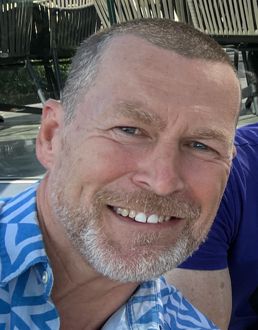
I'm Rob Plevin
After a rather ridiculous number of different careers, I retrained as a psychotherapist in my fifties.
I'm trained in the Human Givens approach and my work at The Life Raft now focuses mainly on anxiety, stress and trauma recovery.
There's a personal reason for that too.
I've had my own experience of trauma and the anxiety, hypervigilance and general mental chaos that can come with it.
So this isn't a subject I've only encountered in textbooks.
I've spent a lot of time learning about what our brains do when they feel threatened...
...and, more importantly, what actually seems to help.
That's what I want to share with you.
This might be for you if...
Your brain tends to start sentences with "What if...?"
You replay conversations long after everyone else involved has forgotten them.
You worry about things you can't control.
You analyse decisions you've already made.
You know you're overthinking something...
but knowing that doesn't make you stop.
You find it difficult to switch off at night.
Or you're simply fed up with giving so much of your time and attention to thoughts you never invited in the first place.
If any of that sounds familiar, come along.
What happens on the day?
We'll spend approximately two hours together live online.
I'll explain what's going on.
I'll teach you some practical techniques.
We'll try them.
You'll have the opportunity to ask questions.
And absolutely nobody is going to make you tell a room full of strangers about your deepest fears.
This is a workshop, not group therapy.
You can participate as much or as little as you like.
Bring yourself.
Bring a notebook if you fancy.
Bring tea.
Tea is always good.
Stop Worrying & Overthinking
🗓️ DATE HERE | ⏱️ time here | £39
Live via Zoom
You'll also get access to the recording afterwards, so if you can't make the live session — or you'd simply like to watch parts of it again — that's absolutely fine.
Yes, I'd like to comeOne final thing.
I can't promise you'll never overthink again.
And frankly, I'd be very suspicious of anyone who did.
But I can spend two hours helping you understand why your mind does what it does and showing you some genuinely useful ways of responding differently when it starts.
And I think that could be a rather good use of a couple of hours.
Hope to see you there.
Rob Plevin
The Life Raft
Psychotherapy . Meditation . Training
This is an educational workshop and isn't a replacement for individual medical or psychological treatment.